
Humans are obligatory problem solvers. They cannot help it. If they didn’t have problems of their own, they would invent them.
We humans love problems! Dealing with problems is essential to our health and well-being. Our brains are designed to anticipate them, think about them, worry about them, and eventually solve them. Our brains do this all the time, very well, and sometimes too well.
Even tho tendencies we may have are natural, evil can come of them when they are allowed to roam too far, or wander outside of the bounds the Lord has set. Problem-solving is one such tendency. It is so ingrained in our being that when things are going generally well, and no problems seem to be presenting themselves to us, we will, of necessity, create our own problems.
If they chose to, most people could objectively look at their lives and see how frequently the problems they had were of their own engineering, and their suffering self-inflicted. Yes, it is true that time and chance happens to everyone, and yet, it is also true that our lives are largely of our own making.
While these two ideas may seem to be at odds with one another, they are both true. It is true because: what happens to us is only half of our life. The other half is how we respond to the things that happen. This weightier half is made up of what we think and do about the things that happen to us, and those around us. It is our response to both the past and present, and also our response to the future.
There is nothing either good or bad, but thinking makes it so. – Shakespeare (Hamlet; Act 2, Scene 2)
We interact with the past thru our our mental and emotional analysis of our memories. We interact with the future thru our mental simulations of possible events. We imagine the things we might say or do, and we play these things out on the stage of our mind. The data we have collected, and analyzed, from the past is fed into these simulations of the future. We interact with the present thru our choices, which are determined by the outcomes of the simulations of our future. After running these simulations, we do a mental calculation. We weigh the pros and cons, consider the benefits and costs, the difficulty and feasibility. In other words, we plan, and then we choose the action based on our plan, however hasty or shortsighted it may be.
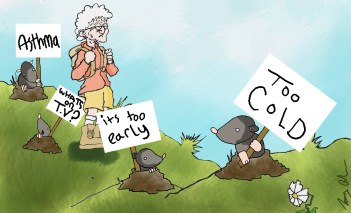 “Problems” have everything to do with our perception of them. As I mentioned above, we even have the power, in our minds, to transform non-problems into problems, or small issues into big issues. The proverb speaks of turning mole-hills into mountains.
For example, it is normal to have disagreements with those around us. It is even normal to argue about those disagreements, but it takes special effort to turn agreements into something to argue about.
Here is an example of what I mean. In episode 10 (of the second season of SSW), Brandy comes back to visit the McGees. Brandy is spending the day with Paige, chatting and helping with the household chores. In this scene the two women are folding laundry together, and we quickly see that things are not going very well. I don’t know how much of this scene is the result of “editorial sculpting”; regardless, this exchange is illustrative.
Brandy: “Do we fold the same?”
Paige: “That’s what I was looking at. I was like, yeah, she actually folds like I do.”
Brandy: “Nice.”
Paige: “That’s pretty cool.”
Brandy: “So, are you particular about, like, say I would have, (she begins to demonstrate folding a towel another way) because there is another way, and so…”
Paige: “No, I would have fixed it. I wouldn’t have said anything; I would have just fixed it.”
Brandy: “You would have fixed it?”
Paige: “Mm-Hmm.”
Brandy: “Ok, so there is a particular way of doing things?”
Paige: “Yeah. There’s a right way and a wrong way.”
Brandy: “Any other, like, pet peeves or particulars? Like, if it was my day to do dishes – would you come in behind me and see if the dishwasher was loaded right?”
Paige: (Nods, Yes)
Brandy: “Yeah? I used to be very particular, but now I’m just so grateful if someone helps. I’ve gotten to where I’m just like, just put it in the closet and shut the door.”
Paige: “No. Towels, they have to be put in a certain way because they will fall over. So, you have to fold them a certain way.”
Brandy: “So, how would that work, you know, with me coming in? If I come in, like, how would that work?”
Paige: “You’ll just have to learn to do it my way.”

If you can grasp the reality, that our lives are largely what we make of them, and yet you continue to feel like you can’t stop worrying, can’t stop creating problems for yourself, can’t stop creating problems for others, cant stop sabotaging yourself and your relationships; then perhaps there’s something wrong with your understanding of the human brain and our search for happiness and satisfaction.
We aren’t made to experience “happiness” in the way normally think of it: carefree, pain free, completely fulfilled, excited, and free of any suffering. Rather, we were made to survive, and survival, in a very human sense, means to create. The strange thing is that suffering (that is, the mental component of suffering), and creating are connected. A large part of suffering involves a mental process called rumination.
Rumination is when we focus all our attention on the ways we are suffering, on its possible causes, and on our failures (and the failures of others) that have led us to our suffering. These thoughts are repeated over and over (thus the name, rumination) without resolution. We allow ourselves to rehash and dwell upon the causes and consequences of our suffering, rather than dwelling on its solutions.
Instead of devising the next step for our life, we ruminate on the last one. Rather than imagining new opportunities, we assume nothing better is possible. Rather than taking control of our life, we embrace an attitude of powerlessness. We become helpless, and our suffering becomes meaningless because we are at the whim of how the world makes us feel, but we were meant for better things. We were created to create. We were made to act, and not to be acted upon (See 2Nephi 2:14-16).
So what is the connection? Rumination (a component of mental suffering) and creativity are controlled by the same parts of the brain, and they have an inhibiting effect upon one another. Suffering will result when we stop creating, and visa versa.
Pain is Inevitable, Suffering is Optional
When we focus on creating, our pain is no longer meaningless – it is no longer “suffering for suffering’s sake”. Rather, as pain cannot be altogether avoided, it becomes an expected part of the process – the pain becomes “worth it”. When we focus on creating and doing, we no longer categorize our emotional experiences as: “things that feel good” or “things that don’t”. Instead, we use the vastly superior categories: “things that are worthwhile” and “things that aren’t”.
Use your mind and energies to create, to do, and to improve. It will give your brain something productive to do. These are the things in life that are worthwhile. These are the things that will give our lives actual meaning, and in a deeper and more satisfying way than complaining and worrying about things will ever do. I repeat, our lives are not made meaningful nor satisfying by complaining. Our lives are not made meaningful nor satisfying by worrying. Our lives are not made meaningful nor satisfying by suffering needlessly, nor by needlessly increasing the suffering of those around us.
Our lives are made meaningful and satisfying by the things we do and create.
Increase the talents given to you, rather than hiding them. Read a book, write a book, grow a garden, fix your marriage, plan a trip, learn a foreign language, learn to play an instrument, go back to school, make your children a larger priority in your life, become a regular volunteer for a local charity, change your own motor oil, quit an addiction, start exercising, organize a chess club, get yourself right with God.
The possibilities are quite literally endless. There are so many things you could do. There are so many thing you ought to do, and you know it. God is the creator, and we are made in his image. We were made to create. We were made to improve.



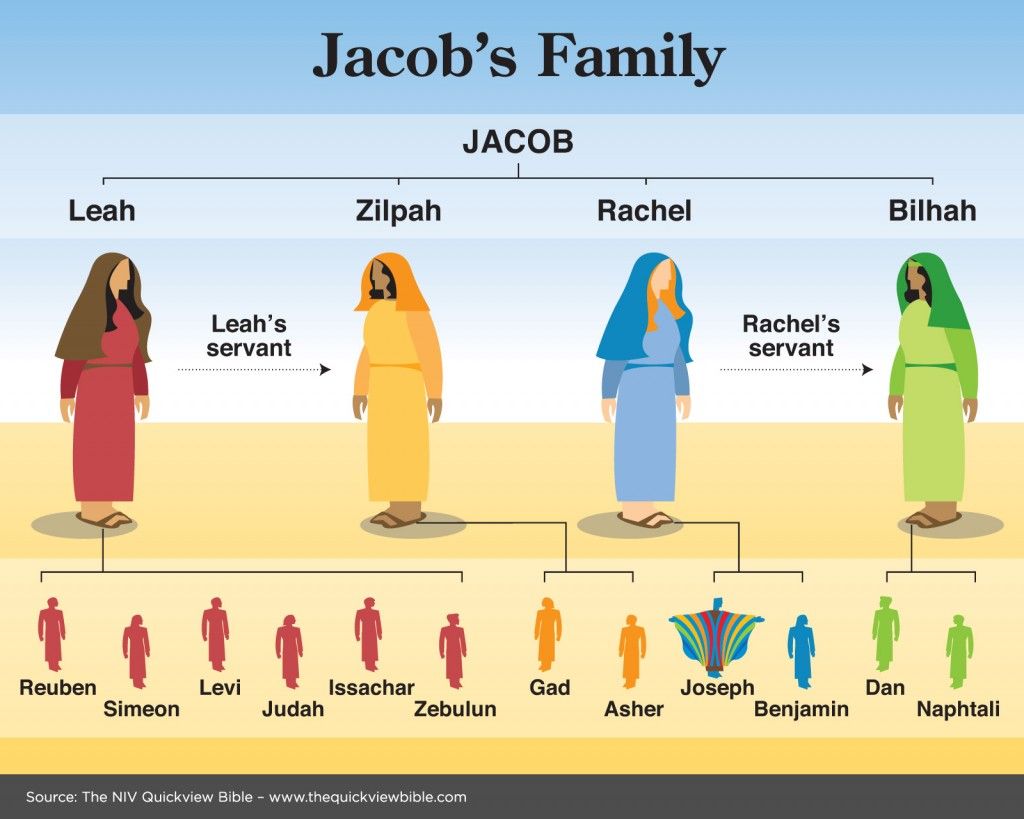
 Speaking of Polygamy...