Sympathetic Biological Envy in Polygamy

Note from the blog owner: Natali Dilts is a new contributor to the blog and this is her first post.

The first memory I have concerning my “bonus-mom” plays back in my mind as follows: being excited to see her and then running towards her but then stopping at the tip of her left ring finger. “Your father asked me to marry him”, I perfectly recall her enthusiastic inflection as she urged me to admire her engagement ring. I looked at it in disbelief, I remember thinking “What about my mom?”. Before I could fully articulate my original reaction, I saw my biological mom embrace my soon-to-be mom, and as any seven year old would, I followed my mother’s example and began to welcome this new woman into my life.

Ten years later, I informed my birth mother of this memory. She then asked me several questions, her questions were questions that I already had. One of the questions being: Most of the people I knew as a child were directly involved in a polygamous relationship; why was my initial reaction negative?

Perhaps the engagement simply caught me off guard because of my expectations of what a romantic relationship looked like.  The courtship process in polygamy is strict and similar to that of a Christian Baptist dating ritual. No physical intimacy before marriage, apparent family involvement, and the purpose of the relationship to be “to the glory of the one and only God”. To the untrained or youthful eye, such a relationship could easily be determined as a close friendship.

I was homeschooled; my two social groups were family and church so the idea of polygamy was not foreign, in fact, it was incredibly common. I was actually more familiar with the polygamous way of life than the typical monogamous way of life. Though I had mentally understood the concept of polygamy fully and I had seen polygamy my entire life, I think I was surprised at my own family’s involvement. However, I do not think that fully explains why I reacted negatively to my bonus-mom’s engagement.

When I was seven, monogamy and polygamy to me was just a difference between two families. Refrigerating bread versus not refrigerating bread was a more prevalent difference between family beliefs than polygamy was. I would talk openly about my two mothers whenever I came into contact with children my age who were not acquainted with polygamy. I continued on that way until I was told not to do so.

“You shouldn’t tell other children that you have two moms; they might get jealous. You get two moms but they only one. You get a bonus-mom.”

Obviously, this was not the real reason I was not to tell “outside children” of my way of life but it’s the reason I believed. I do not think that the general public’s negative view of polygamy influenced my thoughts that day either. However, the majority of the world is mono-normative, meaning, monogamy is the ideal, typical relationship. This is similar to the idea of a physical relationship defining a romantic relationship. People’s certainty of normality speaks so much louder than people’s active disagreeance in regards to your lifestyle.  This concept of normality likely had an effect on me; the effect was not drastic but probably influential.

To be completely honest, I am not exactly sure what prompted me to think this way, there is likely a combination of several things both seen and unseen. I recognize that trying to understand my seven-year-old psyche in order to explain the immediate, sympathetic jealousy that many children of polygamy have felt in defense of their biological mother, will not provide many if any concrete answers. However, opening the discussion may lead to more concrete or evident answers and it may inspire “plyglets” to come forward and tell of their experience in polygamy. I do not claim to speak for all children of polygamy, I also know many “plyglets” who have formed a closer bond to a bonus-mom and felt jealous for her instead of automatically empathizing with their bio-mom. Nor do I claim to be an expert in psychology. These are mere theories of why some children of polygamy may feel jealous in the name of their biological mother.

Transition to siblinghood is similar to the transition into polygamy.

A common explanation describing how one man can love many women is described through how one woman can love many children. Psychoanalytic theorists such as Freud have emphasized the stressful nature of this transition for firstborn children, often citing it as one of the most traumatic experiences of early childhood (Adler, 1957; A. Freud, 1946; Winicott, 1964). Parental attention, once the sole province of the firstborn, must now be shared with a sibling rival. Winicott (1964) considered the distress of first borns during this time to be normative; “it is so usual as to be called normal when a child is upset at a new one” (p. 133). Since several children experience this, they are likely to relate to their mother and be empathetic. I personally experienced this with my mother. I am the oldest and I remember how I felt at the birth of my younger sister, not incredibly positive, I projected the emotions I felt towards my sister onto my mother and how she may have felt about her sister wife. Whether or not my predictions were correct, it caused me to empathise with my bio-mom and her struggle to accept a new wife.

Fetal Bias

Many neonates demonstrate a stronger connection to their biological mothers in contrast to their additional caretaker (father). It has been concluded that the main reason for this phenomenon is the physical dependence of early life. Emotional bonds are created and called “womb bonds” while there is a physical growth of the fetus. Then following the birth of the child, the first moral development stage of life is termed “trust vs mistrust”, where the child learns to trust their mother through physical care or where the child learns mistrust through neglect. The intimacy of this relationship does not extend to the additional caretaker until around the age three. To extend this trust to even more caretakers it could take an additional amount of time and it is not guaranteed to have the same intensity.

Egocentric Sympathy

It is estimated that until around the age of eight children are completely egocentric. Many interpret this as “a lack of sympathy until the age of eight years old” but this is not the case. Children are able to comprehend the difference between positive and negative emotion by the age of twelve months and they typically respond accordingly but they do not see the emotion felt by others as important as their personal emotions because it is not a central part of their world. It would be fair to assume that their biological mother’s emotion is of more importance to them than the emotion of their additional mother.  Simply because, their bio-mom typically plays a more central role in their lives, thus she is more important and her emotional state trumps the emotional state of her sister wife.

Conclusion

In what I have observed in my personal experience and through the basic childhood psychology that I have studied, I conclude that it is likely for a child to feel jealousy out of empathy for their biological mother when the possibility of polygamy is proposed. It is likely for the following reasons: societal influence and expectations help to dictate which ways a child may think of polygamy, there is a closeness to a biological mother that cannot be recreated, and the child is more likely to know of the emotional effects of their biological mother than of their additional mother.

This topic is important to present to the general public and the polygamist public because it highlights an important emotional process that “plyglets” experience. Further psychological speculation or anecdotal information from children of polygamy could be useful in defining polygamy’s place in the modern world.

References and Bibliography

Adler A. The progress of mankind. Journal of Individual Psychology. 1957;13:9–13.

Affonso DD, Mayberry LJ, Sheptak S. Multiparity and stressful events. Journal of Perinatology. 1988;8:312–317. [PubMed]

Alter JK. Unpublished doctoral dissertation. Columbia University; New York: The relationship between language maturity and the adjustment to the birth of a sibling.

“Biomental Child Development: Perspectives on Psychology and Parenting” (2013).

“Envy Theory: Perspectives on the Psychology of Envy” (2010).
Are the Snowdens Married? (Or the Alldredges, or the Brineys?) – What is Marriage?

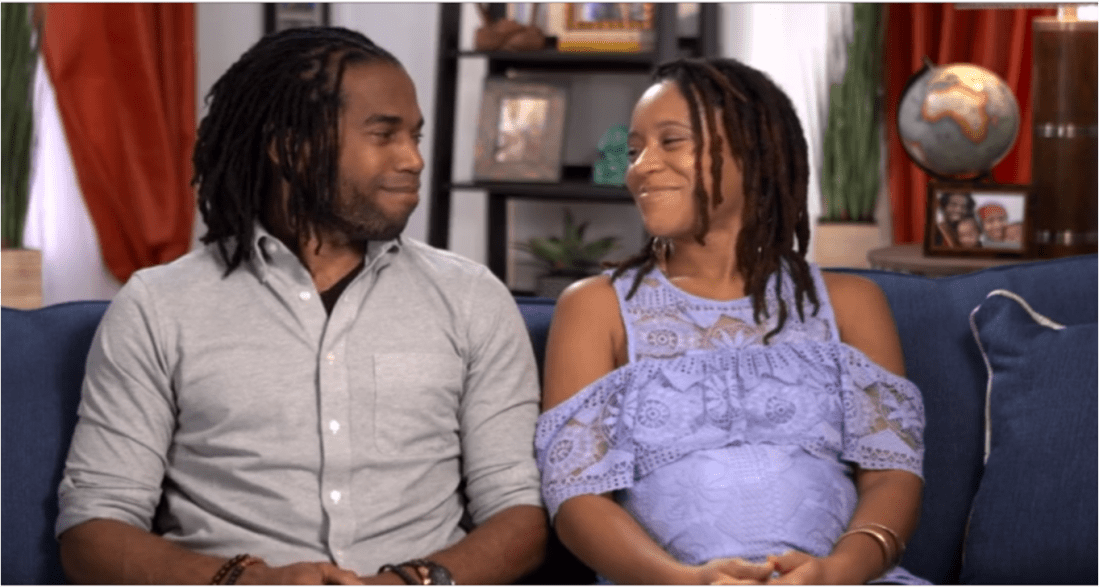
In the first episode of Seeking Sister Wife we are introduced to the Snowden family, Dimitri and Ashley.  A little after 7 minutes in Dimitri tells us that after dating for 2 years they, “Committed [themselves] to each other.” Additionally, on TLC’s, Meet The Families of Seeking Sister Wife, page we learn they have purposefully abstained from a legal marriage under the eyes of the law in order to ensure equality with their future wife.  They consider one another spouses, they have 3 children together, they share finances and many other things, and they also let us know that they have no marriage license from the state of Georgia (or any other state).

We Committed

In light of the several comments and questions my posts have generated (see here and here) about the nature of marriage – especially in the Snowden family, but also in the Alldredge and Briney families as well (and all other plural families too), I have decided to write a post on my views about what constitutes a marriage.

A few years ago (November 2015) some friends of mine decided to rededicate their marriage.  They threw a big party and asked if I would “officiate” at their ceremony.  It was a relatively informal event; I said a few words, and they renewed their vows with each other.  It was a beautiful thing, but the reason they were doing it was a bit disappointing.  You see, they had just left the LDS Church (the reason why is unimportant to this post), and the validity of their Church marriage (specifically their sealing – more about this later) was being called into question by some of their acquaintances.  This is sadly not an uncommon occurrence.  When the Church kicked us out we had the same experience.  Concerns were expressed to us that we had broken our covenants and now we were adulterers, had lost all our blessings, no longer had the Holy Ghost with us, etc.

This post, and my future post about the Mormon concept of Sealing, are adaptations of the words I prepared for that marriage rededication ceremony.  Here it goes:

In 1774, Thomas Jefferson said these words, “A free people [claim] their rights as derived from the laws of nature, and not as the gift of their chief magistrate.” This was two years before the Declaration of Independence.  At the time these were radical words – treasonous words even.

The common model of government at the time was that no rights existed for the common people – except those granted to them by the King.  The King owned all the land, the people were subject to his mandates, and any privileges the people had were granted to them by their Sovereign Lord.  He in turn received all his power from God by virtue of the Divine Right of Kings.  Alas, there are many unfortunate parallels between government and religious authorities.

As powerful as they think they may be, governments are run by men – mortals all.  Governments do not possess any powers unless those powers have been delegated to it by the people who are governed.

The preamble to the Declaration of Independence correctly proclaims this fact.  It reads in part:

We hold these truths to be self-evident, that all men are created equal, that they are endowed by their Creator with certain unalienable Rights, that among these are Life, Liberty and the pursuit of Happiness. — That to secure these rights, Governments are instituted among Men, deriving their just powers from the consent of the governed, That whenever any Form of Government becomes destructive of these ends, it is the Right of the People to alter or to abolish it, and to institute new Government, laying its foundation on such principles and organizing its powers in such form, as to them shall seem most likely to effect their Safety and Happiness.

Eleven years later these ideas were crystallized in the Constitution of the United States of America.  It was the fulfillment of the promise made in the Declaration of Independence.  And yet, despite the Constitution being the founding document of our nation’s government, our Constitution is widely misunderstood; and here is the misunderstanding:

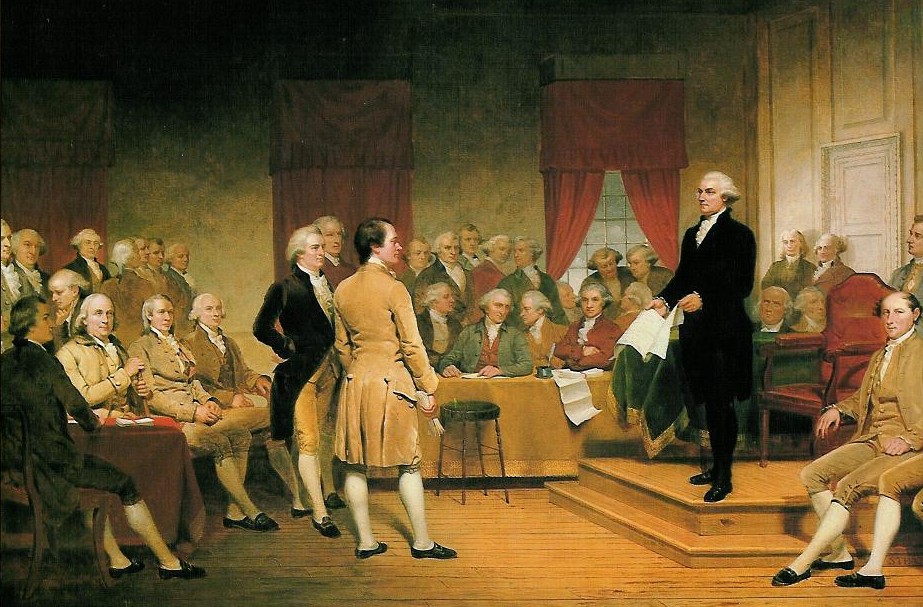
constitutional-convention

The Constitution does not grant you the right to free speech.  It does not give you the right to print what you please, or to choose your own religion.  The Constitution does not grant you the right to carry arms for your defense, to assemble or associate with whom you please, or any of the other things we have imagined it to grant to us.

If you will take the Bill of Rights, and actually read it, you will discover that in every case, the rights mentioned are not granted.  It does not say anything to the effect that, “the citizens of the United States are hereby granted the right to worship as they choose…”  No, No!  On the contrary, it says, “Congress shall make no law respecting an establishment of religion…”  It does not say anything like, “you may carry arms for your defense.”  Rather it says, “the right shall not be infringed”, and on and on.

Indeed, the government cannot grant us anything we do not already have – we, in fact, are the ones that have granted powers to the government – the government does not have anything the people have not given to it.  Rather than being granted, all the rights mentioned are protected.  They are not extensions of our privileges, they are limits and restraints upon the government!

Well, what does all this talk about government and rights have to do with marriage?

The truth is: if the government has any authority at all, to marry anyone, then they have received that power from the people, and their receiving of that power from the people in no way diminishes the rights of the people (unless we let it).  The powers are delegated, yet still retained by the people – because they are inalienable.  They cannot be separated from us.  They are inherent both to our being and to our existence.

The sanctity of marriage is reduced by getting the government to protect it.  Orthodox Christian theologian Davd J. Dunn writes,

“Today’s Christian conservatives seem to be worshiping America, or at least a certain idea of it, when they ask the government to protect the ‘sanctity’ of marriage. In doing this, they have vested the state with the power to sanctify…Christians who demand the state take up the task of defending marital sanctity are effectively making the state their god. They seem to think that their local capitol can perform miracles when [in reality] only the Holy Spirit has the power to sanctify.”

Well, there are some, no doubt, who do not feel the same way about things.  They are upset with anyone who does something out of the ordinary.  And in particular with anyone who exercises their rights while ignoring the religious or civil authorities.  There are many who feel that marriages are illegitimate without the approval of the government, or the Church, or both.

But it has not always been that way.

Marriage in the scriptures, and for most of human history, has simply consisted of a man and woman (usually with the consent of the woman’s father), living together and attempting procreation.  No priest, no license, and no registration.  These are all recent innovations within the last 500 years.  The Catholic Church did not require marriages to be officiated by a priest until 1563.  The Anglican Church did not get around to making this requirement until 1753.  For most of human history, marriage has simply been an agreement (contract), recognized or arranged by the immediate families, for a man and woman to live together.

He calls her wife, she calls him husband.  They share a home, they share a bed.  They have and raise children together, and they have cast their lots together for good or ill.  They are married.  Are the Snowdens married?  Absolutely yes!

Does that mean that any two people can just live together and call it marriage?  The answer is no; that’s just called shacking up.  The other elements are required also, namely the commitment to live as husband and wife – with all the duties and privileges that are connected thereto.  Shacking up, without commitment – without the man taking the woman as wife, is sin.

You could classify marriages into three sorts: social marriage, religious marriage, and civil (or government) marriage.  Social marriage is rooted in the ideas of Common Law and Natural Rights, which I have discussed somewhat above.  It has probably been the most common type of marriage thruout the history of mankind, and perhaps the oldest as well (tho this is debatable I am sure).  Either way, it is certain that of the three, civil marriage is by far the late comer to the party.

What about all this business with government issued marriage licenses then?  When did that become a thing, and why?  First, let us take a look at the legal definition of the word “License”.  From Black’s Law Dictionary (2nd edition, published in 1910) we have:

“A permission, accorded by a competent authority, conferring the right to do some act which without such authorization would be illegal.”

In other words, a license is permission to do something which would otherwise be illegal.  The problem is that the Supreme Court has repeatedly affirmed that marriage is a fundamental right for all.  And even without the Court’s decisions, marriage (both monogamous and polygamous) has existed for thousands of years as a fundamental aspect of human life and society which stems from our rights to associate and to contract.  Marriage predates all our modern laws, governments, and licensing requirements. How then can getting married be illegal?  Of course the answer to this question has everything to do with polygamy.  Licensing of marriage by governments had its origins in efforts to stamp out plural marriage among the early Mormon people (and also to prevent interracial marriage – which is beyond the scope of this post).

In closing, here are some questions you may want to ask yourself (or your friends and family – if you like those stimulating sort of conversations).

If my right to marry is fundamental, why do I need permission from the government before I can get married?

If I get a marriage license, what does that marriage license give me permission to do that I could not do before I got the marriage license?

Who is giving me that permission?

Where did they get the power to give me that permission?

And perhaps the most important question,

If I get married without a marriage license, is my marriage still lawful?

When there is no structure available to you, then make your own.  There is no approval needed from any man, or government, or religious institution to get married.  And despite the disapproval that may be shown by some, it is our God-given, and natural right to do so.

___________________________________________

For another post about the Snowden family and common law marriage see here.