

O, beware, my lord, of jealousy!
It is the green-eyed monster
which doth mock the meat it feeds on.(Othello, Act 3, Scene 3)
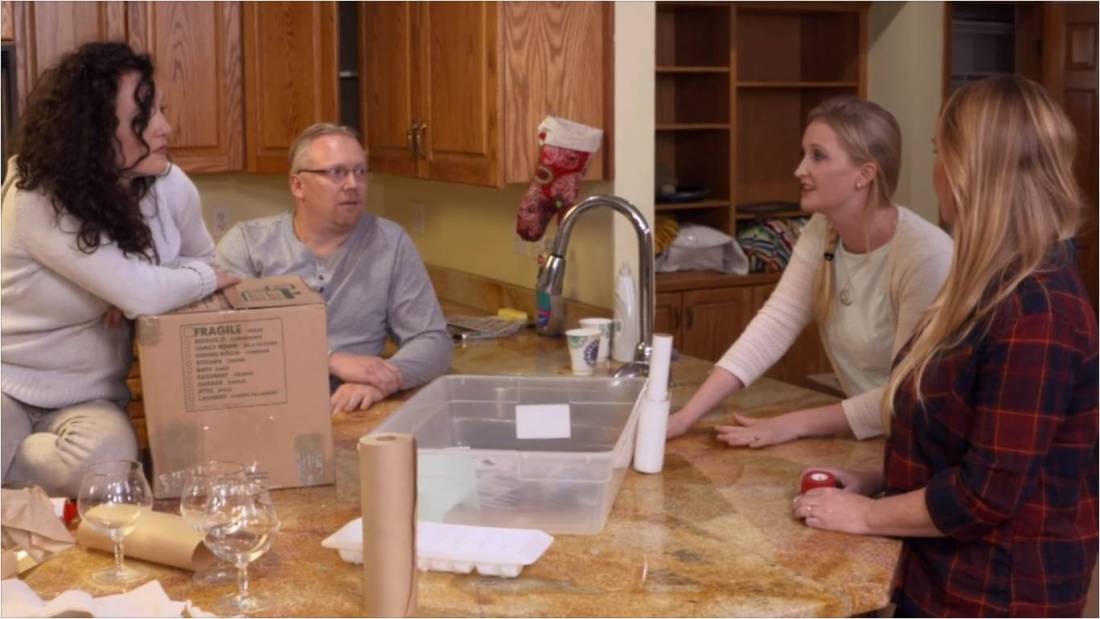
In the first episode of the second season of Seeking Sister Wife we are introduced to some new people. The lovely McGee family (Bernie and Paige). They seem like a very tightly-knit and loving family, and the interaction between their two boys brings an involuntary smile to my face. They are very likable people, and I’m looking forward to watching how things work out for them.
However, we do get several glimpses into their past attempts to add a wife to their family, and it seems that Paige’s jealousy is going to be a serious and recurring issue. And naturally so! There is nothing wrong with jealousy! After all, Jealousy is God’s middle name. Okay, okay, I’m not sure if that is entirely true, but it is one of his names at least:
For thou shalt worship no other god: for the LORD, whose name is Jealous, is a jealous God:
-Exodus 34:14
See! There you go, jealousy must not be such a bad thing after all!
To be clear, I believe, that none of our fundamental natural desires or impulses are, of themselves, bad things. The sin always comes from the perversion of our desires. The desires themselves are God-given and innate. Wrongs comes from the excesses and the misapplications. We want things at the wrong time, or in the wrong way, or in the wrong amounts, and don’t always consider how our efforts to achieve our desires appear to God or to our fellow beings.
For those who know the reference, our desires are like a red lizard sitting on our shoulder and whispering in our ears; arguing for us to give selfish and vile expression to our natural inclinations (for those who don’t know the reference, it is The Great Divorce by C. S. Lewis).  They are a serious hindrance if unbridled and allowed to run free. Appetites and passions are to be kept within the bounds the Lord has set. Food is good; we are even commanded to work for it (Gen 3:19, 2Thess 3:10), but too much of it and we are gluttons. Wine is something to look forward to (Isa 25:6), but drunkenness is a thing to be avoided. Human sexuality is a blessed and pleasurable thing, but is also the greatest snare and temptation of many people’s lives. Money has definite value, and using it facilitates our exchanges for goods and services, but making it the object of our affection is the root of many evils. You get the idea.
On the other hand, if bridled, trained, controlled, and allowed to give their proper vent, our natural inclinations can become our blessing, our strength, and our happiness. This transformation may not be an easy one, but will be well worth the trade for anyone concerned enough to make it!
Back to jealousy. It can be good. It has a purpose. The key is to find out what it is for and when it should be felt. If we can figure out our own selves, and our own emotions (even if it is an incremental process), we will simplify our lives and the lives of everyone around us.
First we must understand what jealousy is. Of course we all know what jealousy feels like, but I think it will be useful to discriminate between it and a very similar emotion, envy. In many cases these two words may be very close in their usage. They can both indicate a longing to posses something. However, the word jealous carries the particular sense of “vigilant (or zealous) in guarding a possession”. Jealousy also carries the connotation of a suspicious fear of losing something. In other words, properly applied, jealousy ought to be used to describe feelings of protectiveness for things that are our own; for things that already belong to us (our own advantages, attachments, relationships, and possessions). Thus, God is jealous for his people, for we are his!
We cross a line into envy when we begin to have similar emotions, but for things that are not ours. Another word for envy is covetousness. It is feeling possessive of things that we do not posses; it is feeling entitled to things to which we do not have a right. This of course, needs to be suppressed, and not allowed to take root.
Here then is the purpose of jealousy: it is one natural mechanism to preserve the romantic bond between spouses. It functions to encourage fidelity between parents (or potential parents). The jealous anger of one partner being both a deterrent to the infidelity of the other, and also a self-motivator for the person experiencing it to fight for the restoration of the bond. This (a strong bond between spouses) of course leads to a multitude of benefits for their children (or potential children), and their subsequent reproductive success.
Predictably, men and women feel jealousy in different ways, and for different (but significant!) reasons. To quote clinical psychologist, Dr. Vinita Mehta:
“Romantic jealously is widely understood to be different for men and women because each gender has a different level of investment in reproduction. For a man to provide for genetically distant children decreases his reproductive success—and because men are uncertain whether they really are the father of said children, they are most susceptible to [experiencing jealousy over] sexual infidelity. By contrast, women can rest assured that they are the mother of their own children; however, they are more dependent on men for resources, making them more sensitive to [experiencing jealousy over] emotional infidelity, since it could threaten the supply of resources for herself and her child.”
Generally speaking, women are concerned (on a basic, visceral level) that their partner’s affection for another woman will lead to a weaker emotional connection, and therefore less desire to care for them, or even that the emotional connection will be altogether severed, causing the man to abandon them for the other woman.
This all goes back to the scriptural, God-given roles and responsibilities for men and women in marriage. This is the Biblical marriage covenant in a nutshell. To quantify this difference, a large study, published in 2014 (this is not the only study confirming these results), reported that men were significantly more likely than women to be upset by sexual infidelity (54% vs. 35%), and significantly less likely than women to be upset by emotional infidelity (46% vs. 65%).
There are many things that could be said about the result of this study, but I want to mention two. First, this does not mean that women don’t feel jealousy over sexual infidelity, or that men don’t feel jealousy over emotional infidelity; rather, it means that their primary causes of jealousy are generally different, and this has significant effects on the way that men and women think and act. The other thing to mention about this finding is that it has nothing to do with age groups, income levels, history of being cheated on, history of being unfaithful, relationship type, relationship length, cultural differences, etc. Like it or not, this difference is an innate, biological difference.
So, how does knowing any of this help the Paige McGees of the world? I think there are at least two useful lessons that can be gleaned from the above.
1) Jealousy is natural, and can even be good, but care must be taken that it does not spill over into envy or covetousness. In order to keep jealousy within a righteous bound, we need to be certain of what is ours to be jealous over. In marriage, wives have a right to financial support for themselves and their children. They have full claim on their husband for that purpose. However, they do not have exclusive rights to him sexually. This is important to know because it can keep you from worrying over things that are not yours to worry about. To put it another way, you shouldn’t feel jealous over things that aren’t yours.
2) Understand that the source of your jealousy may largely (even unconsciously) come from a fear of being abandoned (emotional infidelity). This is certainly a rational fear, as we all know; this scenario has played out many times before. Many monogamous relationships have been broken by an unfaithful man tragically abandoning his wife and children for another woman. However, if you can realize that, in the case of polygamy, your husband is not at all interested in trading you for another woman, but rather wants to keep you both (or however many wives there may be), then that ought to restore your confidence that you are not being abandoned! At least it ought to increase the confidence in your mind – there may still be a battle with emotions, but what’s new  about that? If he is a godly man, then he still wants you to be his wife just as much as ever, his emotions towards you are just as strong as ever, and he still wants to keep his commitment to you and your children just as much as ever.
So, to Paige, and to all the other plural (and potentially plural) wives out there I say: Have confidence in your husband and in your relationship, keep working on maintaining and improving your own relationship with your husband, and don’t worry too much about things that are not your business to worry about.
 or in transition between them. For example, I know a family with three wives. Two of them lived together in a single dwelling while the third (who was reportedly more difficult to live with) lived in a separate city. Later on, the third, separate-city wife moved to a separate house next door to the other two, and lived there for a while. Now they are all living together under one roof! Ultimately, the solution to this problem will be different for each family, and lies in finding the correct balance between the practical and the emotional. Both are very real issues, and need to be addressed.
 Speaking of Polygamy...