
Recently, I have seen the debate about polygamy getting louder and louder. I see it on Facebook and Instagram, among other platforms. I hear people who are for polygamy, wanting only to defend their right to practice. I see people who are against it, wanting to shame and destroy the doctrine of polygamy.
One example of this anti-polygamy is the argument that Joseph Smith did not practice polygamy and that Brigham Young took it too far. Another is that Joseph did practice it and he was a fallen prophet. I have heard that Abraham, Jacob and other Old Testament prophets only practiced it because there were so few people then and it was needed.
With all these arguments, what I really hear people saying – as I listen between the lines – is that they don’t want it to be a commandment because, if it was, it would be a sin not to practice it. If they can debunk polygamy and the practice of it, they can rest easy.
When I’m asked why I practice polygamy, I explain it is my religious belief. I was not commanded to practice it by a prophet or by deity, but rather I saw that it was a valid and true doctrine in the Bible. I lost family, friends, church, jobs, self-esteem, and pride by practicing polygamy. And yet, I stand strong in the faith of this practice. I have found some scriptures that speak of plural marriage, but one stands out among the rest:
Matthew 25:1-13:
Then shall the kingdom of heaven be likened unto ten virgins, which took their lamps, and went forth to meet the bridegroom.
The Kingdom of Heaven represents us. As followers of Christ, we are to be the Kingdom of Heaven. The ten virgins are worthy members of the Kingdom. They are virgins because of their virtue. They are to be brides, not bridesmaids. Christ is represented by the Bridegroom. We are to make a marriage with Christ, or make a covenant with Christ. If we were to be bridesmaids, we would only watch someone else make a covenant with Christ.
Matthew 25:1-13 (continued):
And five of them were wise, and five were foolish. They that were foolish took their lamps, and took no oil with them: But the wise took oil in their vessels with their lamps.
This tells us that half of the virgins, though they were worthy of the Kingdom, were not prepared for the Kingdom. If Yeshua (Jesus) was just talking about one virgin marrying the bridegroom, He would have used an example of a virgin who was preparing to get married, but was foolish, so another stepped in place to be married. But we know that back then, most marriages were arranged. So, we see that not only were there ten virgins preparing to marry one man, but it was already arranged for this to happen.
Why would Yeshua speak of ten – or even five – wise virgins marrying one man all together unless polygamy was valid, even for Him at the Meridian of time? And why would Yeshua marry them at one time, instead of individually?
Because we are the body of Christ.
Each of us makes up a part of Him. Therefore, we are taught to love one another, even as He loves us (us being a whole). In plural marriage, each wife makes up a part of the husband; they are not a repeat of the same part. Each wife brings a different aspect of her husband to the marriage, completing him.
Matthew 25:1-13 (continued):
While the bridegroom tarried, they all slumbered and slept. And at midnight there was a cry made, Behold, the bridegroom cometh: go ye out to meet him.
We have seen that Yeshua taught that most people would be asleep when He comes again, even as a thief in the night. And if they knew that He was coming then, they would be awake and ready for Him.
When suddenly the cry was made, those virgins who took extra oil, added it to their lamps and lit them. This was a sign for the bridegroom that they were waiting for him. It should bring to mind the saying, “Let your light so shine before men, that they may see your good works, and glorify your Father which is in heaven.” (Matthew 5:16)
Matthew 25:1-13 (continued):
Then all those virgins arose, and trimmed their lamps. And the foolish said unto the wise, Give us of your oil; for our lamps are gone out. But the wise answered, saying, Not so; lest there be not enough for us and you: but go ye rather to them that sell, and buy for yourselves.
The oil represents our virtues and values that we preserve for our God. It isn’t something we can share with someone else. It is something that we can only preserve to ourselves. Each person must earn and grow their own virtues.
This is later reiterated in Matthew 25:26-27 when Yeshua speaks of the parable of the Talents. He tells the one that did not multiply his talents, that he was not a good servant. Yeshua said,
Thou wicked and slothful servant, thou knewest that I reap where I sowed not, and gather where I have not strawed: Thou oughtest therefore to have put my money to the exchangers, and then at my coming I should have received mine own with usury.
Yeshua is trying to teach us that we are responsible for our own actions, and we cannot ride the coattails of another to enter the kingdom of heaven.
Matthew 25:1-13 (continued):
And while they went to buy, the bridegroom came; and they that were ready went in with him to the marriage: and the door was shut. Afterward came also the other virgins, saying, Lord, Lord, open to us. But he answered and said, Verily I say unto you, I know you not. Watch therefore, for ye know neither the day nor the hour wherein the Son of man cometh.
The obvious point of this parable is to show us that we need to prepare for the coming of Yeshua, the Messiah.
But why did He use ten virgins to explain this parable, except that polygamy was common at that time? Is it even possible that Yeshua, himself, practiced polygamy? Ogden Kraut explained in his book Jesus Was Married that Yeshua (Jesus) could have married both Mary and Martha.
Some may agree and some may not with my explanation of this parable. I don’t think it can be argued that the virgins were bridesmaids instead of brides. If they were not brides, they would only be watching the wedding and not participating. This idea is invalid, as the parable starts out with, “The Kingdom of Heaven is like unto ten virgins.” This means that the virgins were participating in the wedding, not just observing it.
So, there you have it.
If you argue against polygamy, please explain this parable to me in a better way, so that I can understand your argument.
If you are for polygamy, you have the words of Christ to back you up.
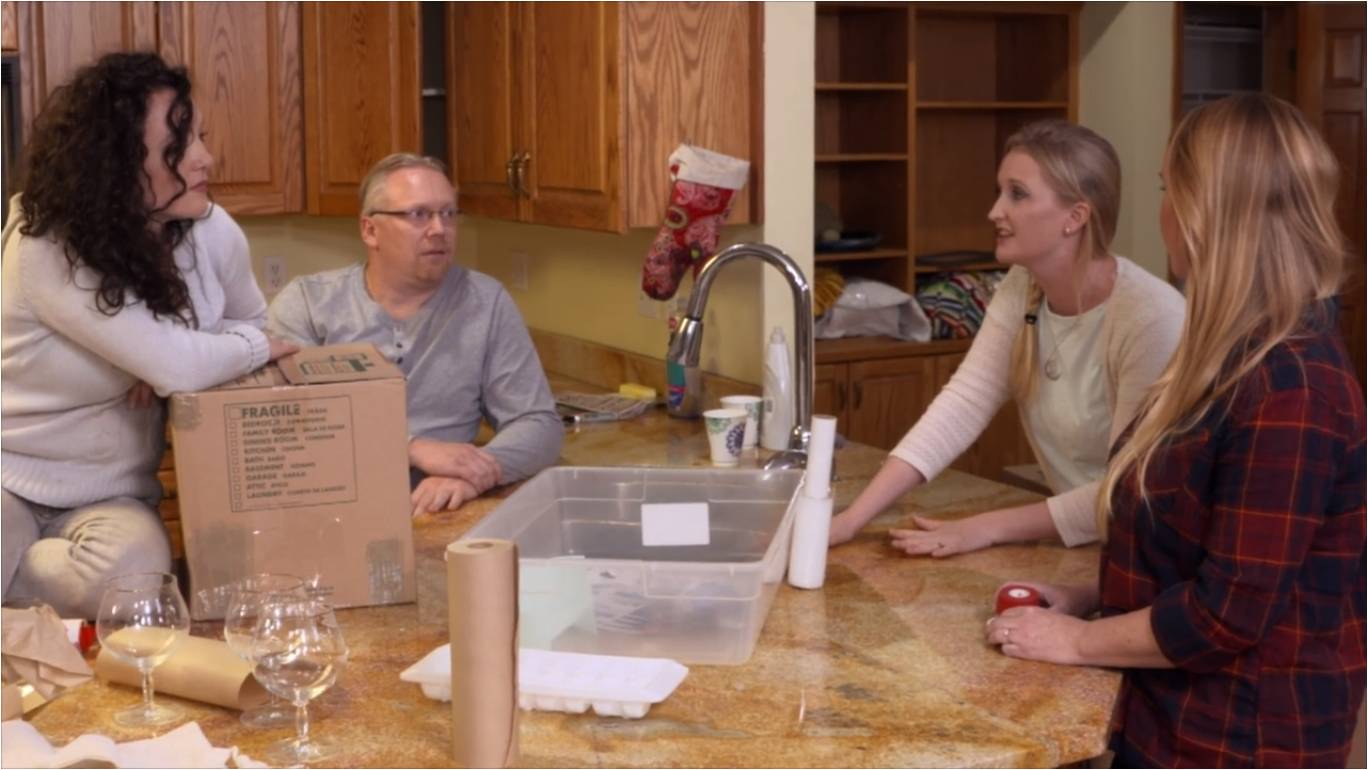
 or in transition between them. For example, I know a family with three wives. Two of them lived together in a single dwelling while the third (who was reportedly more difficult to live with) lived in a separate city. Later on, the third, separate-city wife moved to a separate house next door to the other two, and lived there for a while. Now they are all living together under one roof! Ultimately, the solution to this problem will be different for each family, and lies in finding the correct balance between the practical and the emotional. Both are very real issues, and need to be addressed.
 Speaking of Polygamy...