
To be uncomfortable is not always wrong!
When someone learned that I live polygamy, I was told that “she” would never share a man and that it is disgusting. (Who “she” is does not matter, because more than one woman has told me that.) I’ve also been told, “I would never do that to my wife.”
I understand how uncomfortable polygamy is to live. I understand it because I live it.
It is interesting to watch someone react when polygamy is brought up. There are some small reactions.
And then there are some bigger, more dramatic reactions when it seems as tho I just presented a salty, lemony, and vinegary drink. If you can imagine the face someone would make drinking that, it is the same face I have seen when talking about polygamy.
To say the least, it is an uncomfortable topic for most people.
I usually do not mention polygamy; it usually is introduced from another source and then I feel like I should explain it better.
I want people to understand that I am not just playing with women and their emotions, but rather I am taking a woman on as a wife, companion, and helpmate.
I made an egg sandwich to eat for breakfast. I toasted the bread on a hot skillet, fried the egg, heated up some sandwich meat, and added cheese on top of the egg to melt. After putting it all together, I had a simple breakfast. I asked my daughter to try this sandwich and after one bite, she made a face and said, “It’s okay.” And yet, when I make the same sandwich for my wives, they are grateful and often say it was delicious and hit the spot.
What makes one person not like something and another person enjoy it fully? Is it that it tastes different? That cannot be because they both are tasting the same thing. However, it is that each person has different tastes, different preferences of textures, and different ideas of what is delicious in what they experience. I have found that my tastes have changed and broadened as I have gotten older.
Just because something is uncomfortable, does not mean it is wrong. Sometimes it is true that we are in a bad place or situation, and we are being warned to get out. It is uncomfortable for an appropriate and valid reason.
But not all uncomfortable feelings are bad.
There is a scripture that says, “Ye shall know them by their fruits.” (Matthew 7:16)
If a leader tells you about a doctrine that does not seem right or is uncomfortable, it should be challenged but not outright dismissed. When Joseph Smith first introduced polygamy to the Latter-Day Saints of his time, it was introduced to a few persons at a time. It was done in an intimate setting where Joseph could explain to them more of the details of the doctrine, instead of dumping it on everyone and expecting compliance.
So, if some fruit is introduced, it needs to be tasted before it can be judged. So it is with an idea, a doctrine, a new food, we need to taste it first to see if it is good.
There is something to be said of the traditions of our fathers. In other words, sometimes we do things the same way our parents did, just because they did it that way.
There is a story of a woman who cut her meat a certain way to fit in her pan for cooking. Her daughter learned this technique by watching and helping her mother. As she became a mother, she cut the meat the same way, chopping off the ends. The granddaughter was then taught to cut off the ends of the roast. As the great-granddaughter learned to cut off the ends of the meat, she questions why it was done this way. They learned that it was because the first mother did not have a pan big enough for the roasts, so she cut off the ends to fit the pan. The women of this family continued the traditions even though the pan got bigger and could hold the whole roast.
My mother did not like the idea of polygamy. She was vocal about how it bothered her, and she would not be a part of polygamy, even if it were required to get into heaven. And yet, she was a descendant of polygamy. Her great-grandfather is Israel Barlow, a famous polygamist from the era of Joseph Smith.
In the LDS Church, the practice of polygamy has been banished, tho it was once embraced and taught by the leaders. Now when I talk with members of the LDS Church, they are offended and hate the idea of polygamy.
Members of the LDS Church receive a Patriarchal Blessing which states their lineage, connecting them to their fathers. This lineage links them to Israel and they are pronounced to be a part of one of the twelve tribes of Israel. And yet we know that Israel was a polygamist, having four wives.
How is it that we claim to be a part of a lineage that practiced polygamy and yet we do not want to accept polygamy as a valid form of a family structure? In fact, we often criticize it as a society.
If we are so critical of polygamy, we must also abandon the thoughts of our lineage through Israel and the blessings of Abraham. We, as a society or church or even family, cannot partake of the lineage God set up if we do not embrace the head of that lineage.
I have been told that polygamy brings about child marriages and child sexual abuse. As a law enforcement officer, I have seen children in bad situations without polygamy being involved at all. If we hear of any child brides, usually it is one group of people who have strayed from the path.
There are rules with polygamy that are based on the Bible. A man cannot marry a mother and daughter. A man cannot court a woman who is already married. A man can only marry as many women as he can care for (this is why royalty mostly did polygamy) without taking away from his current wife (see Leviticus 18).
In the media, we only hear part of the story and how terrible things are. As we all know, no one would watch the news if it was always roses, clouds, rainbows, and unicorns. As a society, we love to hear about someone else’s problems, faults, shortcomings, and trials.
So, when polygamy is brought up, they do not say how it helps single mothers have help with their children. It is not discussed how children grow up with siblings and a father. It is not discussed how financially it stabilizes the household when everyone works together.
Polygamy is not a comfortable concept.
Often, my family must re-adjust thought processes when we come into a new situation. We have to think about how it affects two or more wives, not just one.
We must have an understanding of how we are perceived and not personalize it. We must be open to how the world will not view the second wife as valid and often she misses out on the benefits of marriage.
It is easy to go back to ways we were taught growing up, when we believed in monogamy.
Society has been used to thinking about marriage as monogamy for multiple decades. When we must resolve an issue, we must change our way of thinking.
As we have learned thru experience, when we are willing to conform and grow, we have been able to grow together with a stronger unit than by ourselves. When we had to grow in our past marriages, it was often by ourselves as our spouses were not willing to conform and change with us.
So, what does the fruit of polygamy taste like? You will only know by tasting it.
So don’t judge polygamy if you don’t want to truly see how it works. You cannot tell someone who has tasted it that it looks weird and therefore tastes bad without being a bigot.
To say, “It is uncomfortable, therefore it is wrong,” does not do justice.
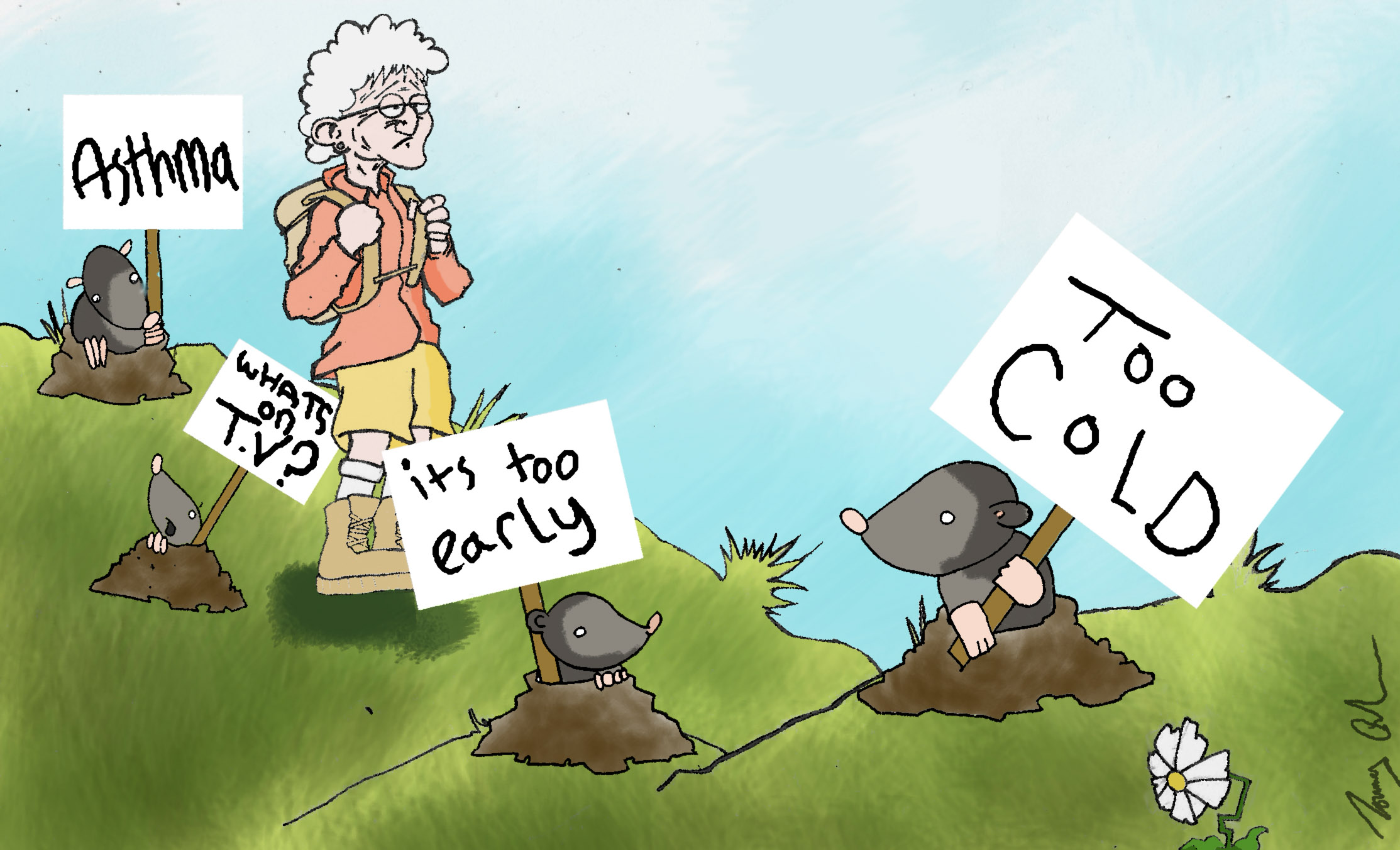 “Problems” have everything to do with our perception of them. As I mentioned above, we even have the power, in our minds, to transform non-problems into problems, or small issues into big issues. The proverb speaks of turning mole-hills into mountains.
 Speaking of Polygamy...